
Fique por dentro das novidades
Inscreva-se em nossa newsletter para receber atualizações sobre novas resoluções, dicas de estudo e informações que vão fazer a diferença na sua preparação!

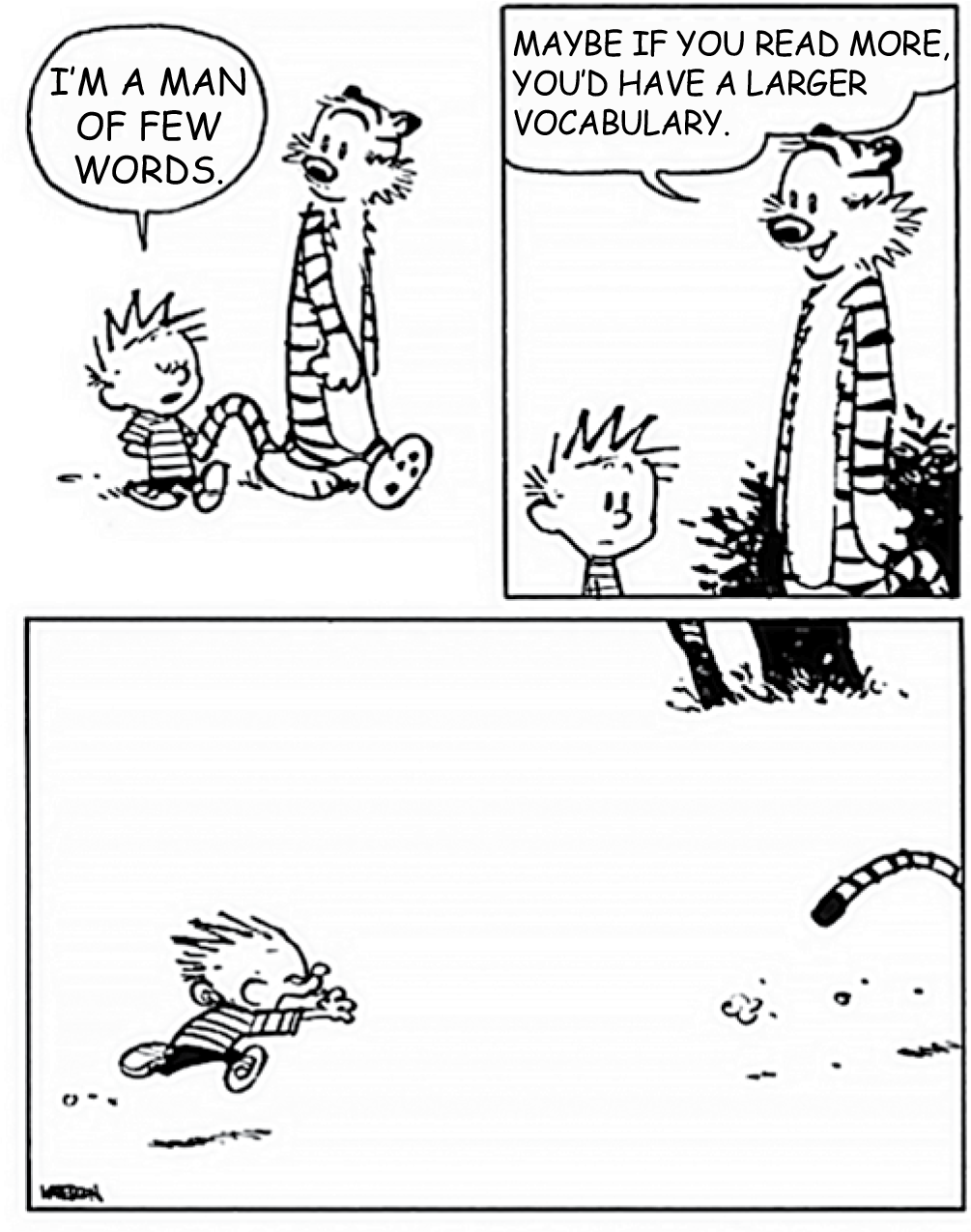
Examine a tirinha Calvin and Hobbes de Bill Watterson.
(www.facebook.com, 10.06.1995.)
In the last panel, based on the cartoon, the boy got angry because
he believed that he was wise but the tiger undermined his self-perception.
the tiger said it had the same problem but, in fact, it was not true.
the tiger agreed that he was a thoughtful boy.
the tiger agreed with his statement that he was not talkative.
he intended to annoy the tiger but the feline became happy with the result.
No primeiro quadro, Calvin utiliza uma expressão idiomática ("I'm a man of few words") para se descrever como alguém que fala pouco por ser profundo e sábio. Hobbes, o tigre, subverte essa autoimagem no segundo quadro ao sugerir que a escassez de palavras de Calvin não se deve à sabedoria, mas, sim, a um vocabulário limitado. Nesse sentido, a raiva de Calvin, no último quadro, decorre do fato de Hobbes ter "desmascarado" sua autopercepção enquanto intelectual.
Inscreva-se em nossa newsletter para receber atualizações sobre novas resoluções, dicas de estudo e informações que vão fazer a diferença na sua preparação!